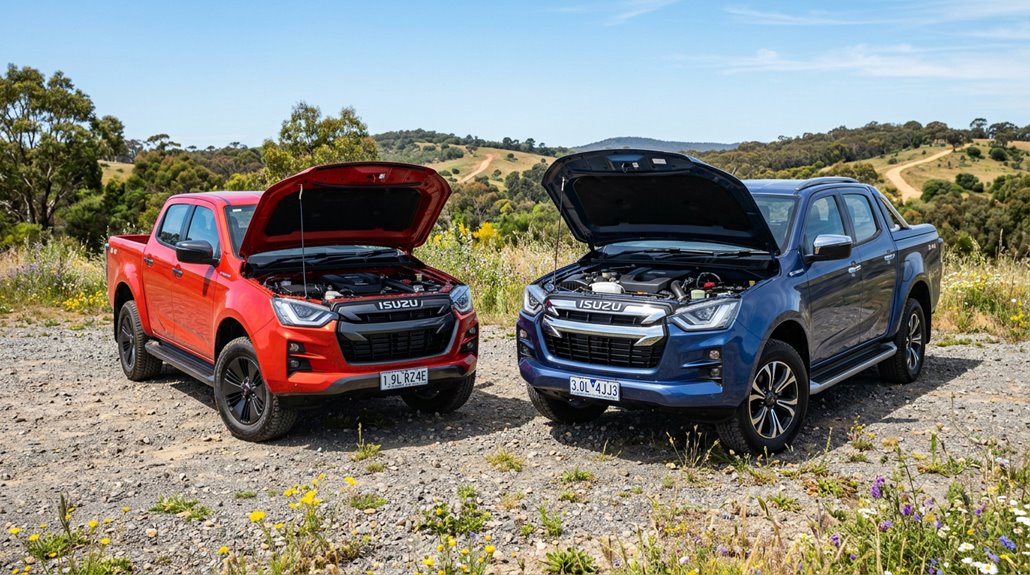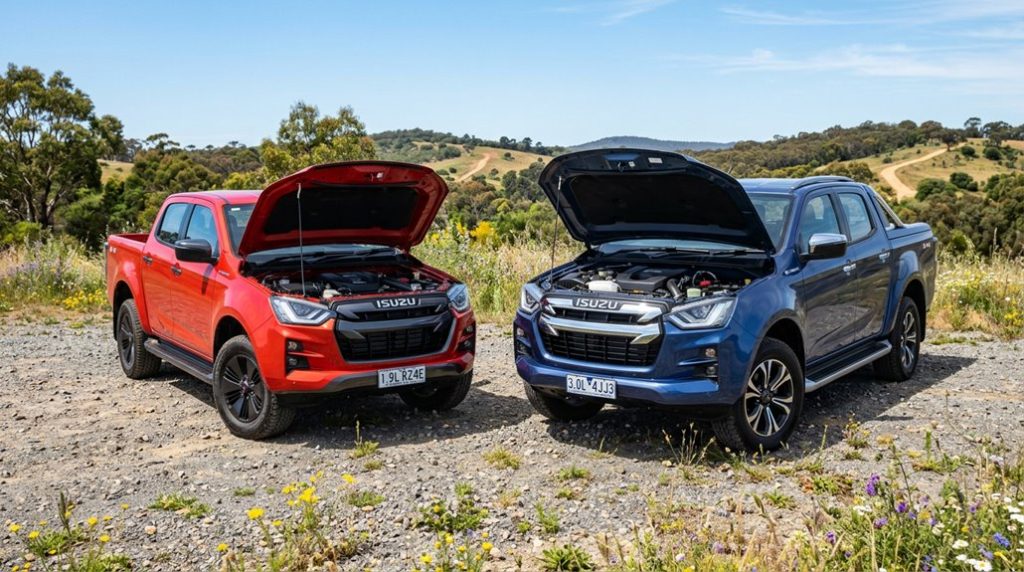
Bigger isn’t always better — but sometimes it is. The Isuzu D-Max comes in two very different flavours: a fuel-sipping 1.9-litre turbo-diesel built for smarter urban driving, and a muscle-flexing 3.0-litre powerhouse capable of hauling 3,500 kg without breaking a sweat. Choosing the wrong one could cost you — in fuel, performance, or pure frustration. The engine that suits your needs depends entirely on how you use your ute.
Understanding the Key Differences Between the 1.9 and 3.0 Engines
Grasping the key differences between the Isuzu D-Max 1.9 and 3.0 engines is essential for potential buyers. The 1.9-litre RZ4E turbo-diesel generates 110 kW and 350 Nm, ideal for efficiency, with a combined fuel consumption starting at 6.7 L/100 km. In contrast, the 3.0-litre 4JJ3 turbo-diesel produces 140 kW and 450 Nm, offering stronger performance, especially when towing heavy loads.
Understanding the differences between the Isuzu D-Max 1.9 and 3.0 engines is crucial for informed buying decisions.
- 1.9-litre:
- Power: 110 kW
- Torque: 350 Nm
- Towing: Up to 3,000 kg
- 3.0-litre:
- Power: 140 kW
- Torque: 450 Nm
- Towing: Up to 3,500 kg
Additionally, understanding these specifications helps buyers identify which D-Max suits their needs, as the huge range of variants offers something for every requirement. For buyers seeking a capable SUV alternative, the Isuzu MU-X range also utilises the 3.0-litre engine, delivering the same impressive power and torque in a premium 7-seater package.
Practical Advice: Choosing the Right Engine for Your Lifestyle
Choosing the right engine for an Isuzu D-Max markedly influences daily driving experiences and overall satisfaction. For urban commuting and mixed-use, the 1.9L engine excels with a combined consumption of 6.7–6.9L/100km, making it an economical choice. In contrast, the 3.0L offers superior power (140kW/450Nm) for motorway overtaking and heavy towing, rated at 3,500kg. Additionally, the 3.0L’s electronic rear differential lock enhances off-road capabilities, making it a standout for adventurous drivers.
Key considerations include:
- 1.9L: Ideal for light loads, budget-conscious buyers, and fleets, with lower upfront costs.
- 3.0L: Best for those needing dependable performance, frequent towing, or carrying heavy tools.
When deciding, assess driving patterns and needs carefully. For many, buying an Isuzu D-Max is a long-term investment in reliability and performance. To further protect that investment, Isuzu owners can take advantage of extensive warranty options that guard against manufacturing defects and provide dedicated support throughout ownership.
How Can Your Dealership Assist in Making the Right Choice?
When selecting the right engine for an Isuzu D-Max, expert guidance can markedly improve the decision-making process. Dealerships provide invaluable support through various services tailored to customer needs.
- Comprehensive engine briefings: Detailed comparisons between 1.9L and 3.0L specifications, including power outputs and towing capacities.
- Transparent pricing and financing: Side-by-side comparisons of drive-away costs and financing options, aiding in budget planning.
- Structured test drives: Opportunities to experience both engines in real-world conditions, demonstrating their performance differences and suitability.
- Post-drive consultations: Debrief sessions using spec sheets to clarify engine choices in relation to individual requirements.
Choosing the right manual_isuzu dmax engine becomes easier with professional understanding and tailored assistance from a knowledgeable dealership. Auto House Vryheid brings over 100 years of automotive industry experience to help you confidently select the engine that best suits your personal or commercial driving needs.
Key Considerations for Long-Term Ownership and Maintenance
In evaluating long-term ownership and maintenance of the Isuzu D-Max, two engines—1.9L and 3.0L—present distinct advantages. The 3.0L engine excels in heavy-duty applications, offering 140 kW and 450 Nm, ideal for towing and commercial use. Its lower stress under load improves durability, making it a great choice for those who frequently tow heavy weights.
Conversely, the 1.9L engine, with 110 kW and 350 Nm, is better suited for urban driving and light-duty tasks. Its lower fuel consumption of approximately 6.7 L/100 km results in reduced long-term running costs.
Ultimately, this Isuzu bakkie comparison highlights the importance of aligning engine choice with intended use, ensuring peak performance and maintenance over time. For added peace of mind, Isuzu owners can benefit from roadside assistance and warranty support to safeguard their investment throughout the vehicle’s lifespan.
Ready to Find Your Perfect Isuzu D-Max? Contact Us Today!
Ready to find the ideal Isuzu D-Max? Auto House Vryheid offers a range of options tailored to suit diverse needs, whether prioritising efficiency or power.
Understanding the differences between the 1.9-litre and 3.0-litre engines can guide your decision.
- Engine Power: 1.9-litre delivers 110–120 kW; 3.0-litre offers 140 kW.
- Torque: 1.9-litre provides 350–360 Nm; 3.0-litre boasts 450 Nm.
- Fuel Efficiency: 1.9-litre averages 6.9–7.3 L/100 km; 3.0-litre ranges from 7.1–8.0 L/100 km, with the combined cycle of the 1.9-litre being 40.4 mpg.
- Towing Capacity: Both variants can tow up to 3,500 kg.
For a thorough insight and personalised assistance, contact Auto House Vryheid today. Located at 264 Church Street, Vryheid, the dealership also provides access to parts, accessories, finance, insurance, and Isuzu Roadside Assistance to support you throughout your ownership journey.
Explore which model aligns with your lifestyle and requirements.